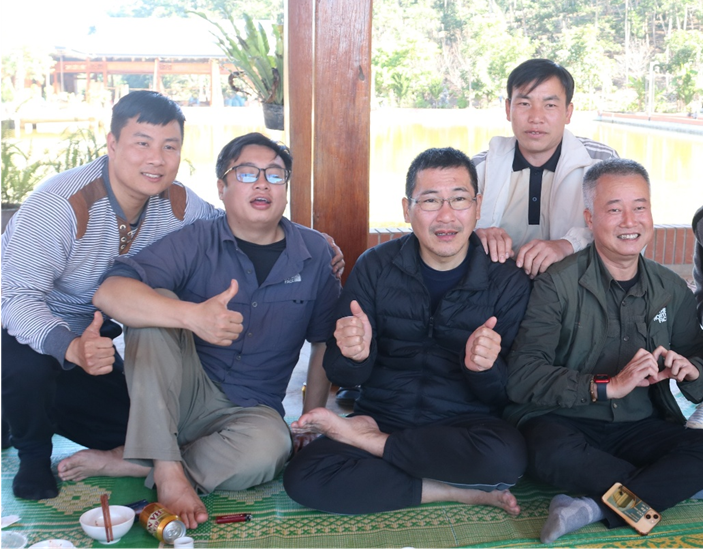
From November 22 to December 2, 2025, Prof. Masaharu Motokawa and colleagues carried out a field survey in Xuan Nha Nature Reserve (Son La Province, Vietnam) under the Nagao-NEF project “Species Diversity of Terrestrial Vertebrates in the Mountains of Indochina”. Our aim was straightforward: to add solid field evidence to what we know about biodiversity in this mountainous area.
This survey was conducted by researchers and students from Japan, Vietnam, and Lao PDR. The field team included Prof. Masaharu Motokawa, Prof. Kanto Nishikawa, Dr. Ibuki Fukuyama, and Dr. Yukio Ichioka from Japan; Assoc. Prof. Nguyen Truong Son, Dr. Bui Tuan Hai (with four his students), Dr. Ninh Thi Hoa, Dr. Nguyen Thanh Luong, Mr. Vu Kim Luong, and Ms. Vu Thi Huong Yen from Vietnam; and Mr. Chanthavong Keovongsy from Lao PDR. Together, the group represented Kyoto University, Hokkaido University, Feculity of Environmental Sciences–Natural University of Laos, Vietnam National University, and Institute of Biology, Vietnam Academy of Science and Technology (IB-VAST). Beyond the data collected, the trip was also an important opportunity for hands-on training and close interaction among international colleagues working in the same forest, under the same field conditions.
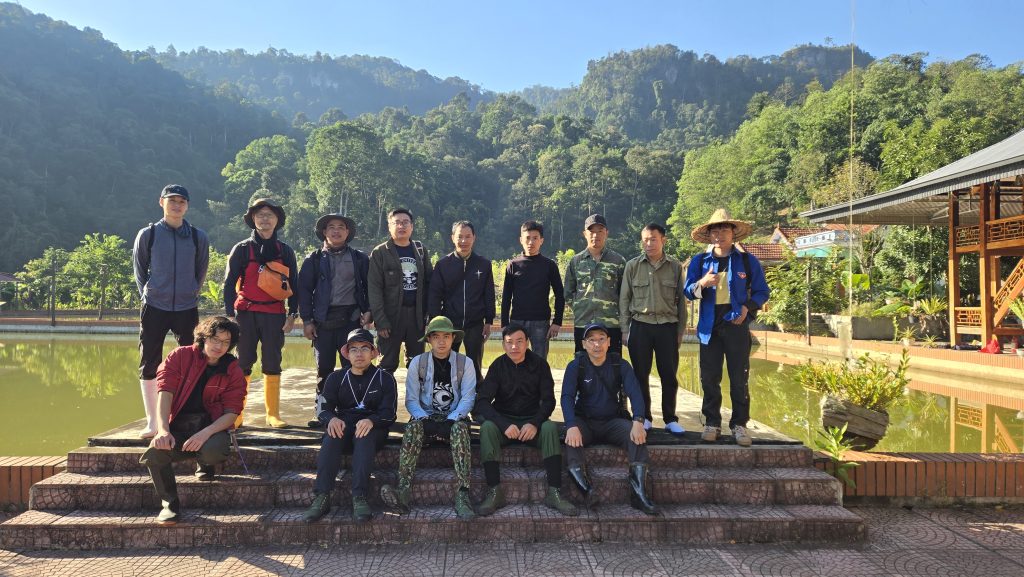
After preparation at IB-VAST in Hanoi, the team traveled to Son La Province and entered Xuan Nha Nature Reserve. Once on site, the work quickly settled into a field routine: equipment checks in the afternoon, long nights of trapping and surveys, and careful note-taking and specimen processing after returning from transects. As the “standard fomular”, the team divided into three specialized groups: Rodent, Bat, and Herpetology.
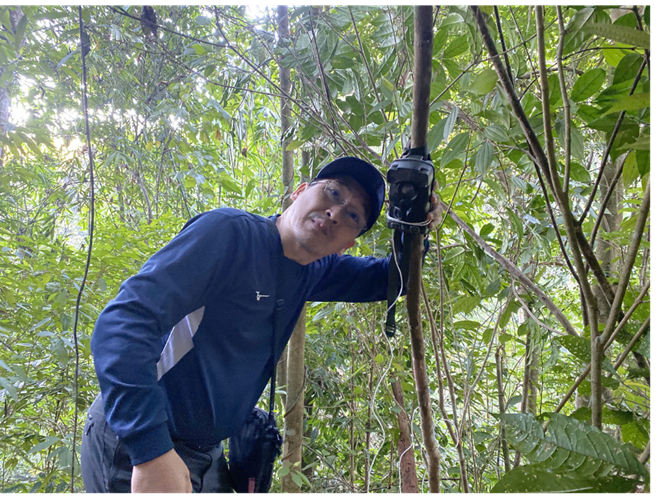
Rodent group. The group set trail cameras and more than 200 traps, including Sherman traps, pitfall traps, and mole traps. Over the survey period, the group recorded 12 species of rodents, shrews, and moles. Trap placement and daily checks required patience and experience, especially in steep terrain and dense forest where small changes in microhabitat can make a big difference.
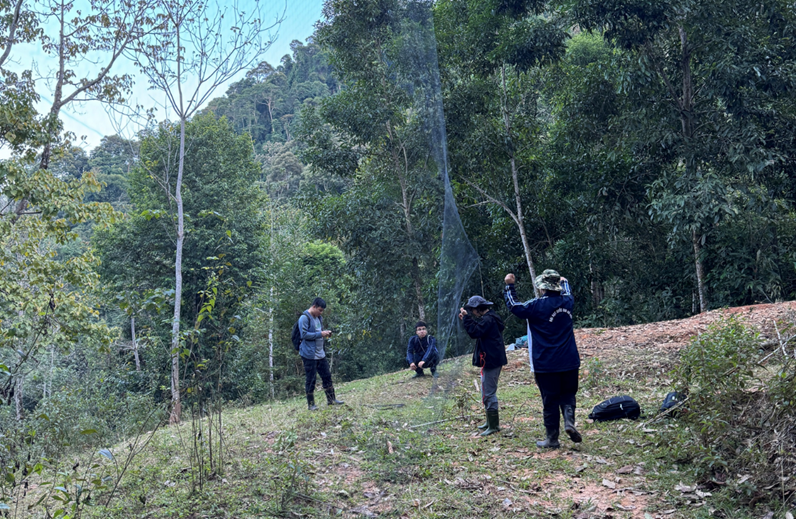
Bat group. The group worked mainly at night, using mist nets and harp traps and recording echolocation calls with a bat detector. The group documented 15 bat species. Combining capture-based methods with acoustic recording helped improve detection, especially for species that may avoid nets or fly above typical trap height.
Herpetology group. The herpetologists conducted field encounter surveys, set funnel traps, and also checked for road-kill specimens by motorbike along suitable routes. By the end of the trip, the group recorded 12 species of amphibians and reptiles. This work often depended on timing, weather, and persistence due to many animals appear only during short windows, and careful searching is key.
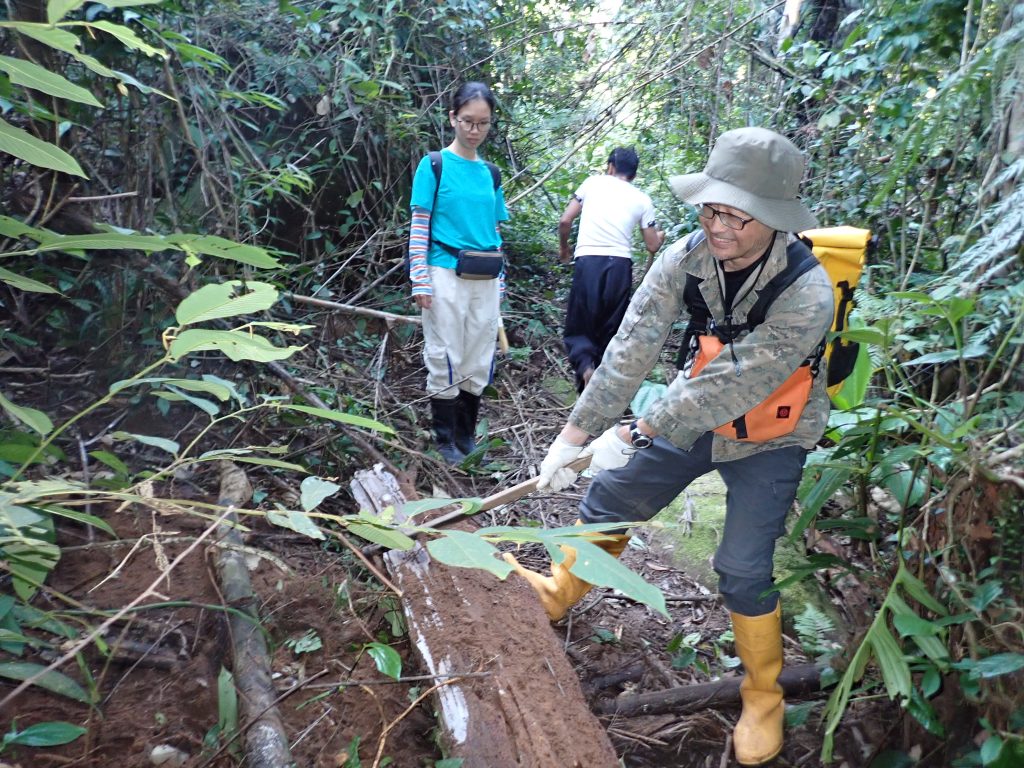
Animals collected by each group were measured and photographed in the field. After basic processing, specimens were preserved using appropriate methods and are now stored at IB-VAST for further study. These materials will support later identification works, comparisons with museum collections, and follow-up analyses.
A major strength of the survey was the close cooperation with local collaborators. Their knowledge of the reserve helped the team select productive survey sites, refine trap placement, and work more efficiently. Just as importantly, daily interactions (sharing meals, discussing routes, and reviewing findings) built a strong working atmosphere. We believe this trust and cooperation played a real role in the most interesting results of the trip.
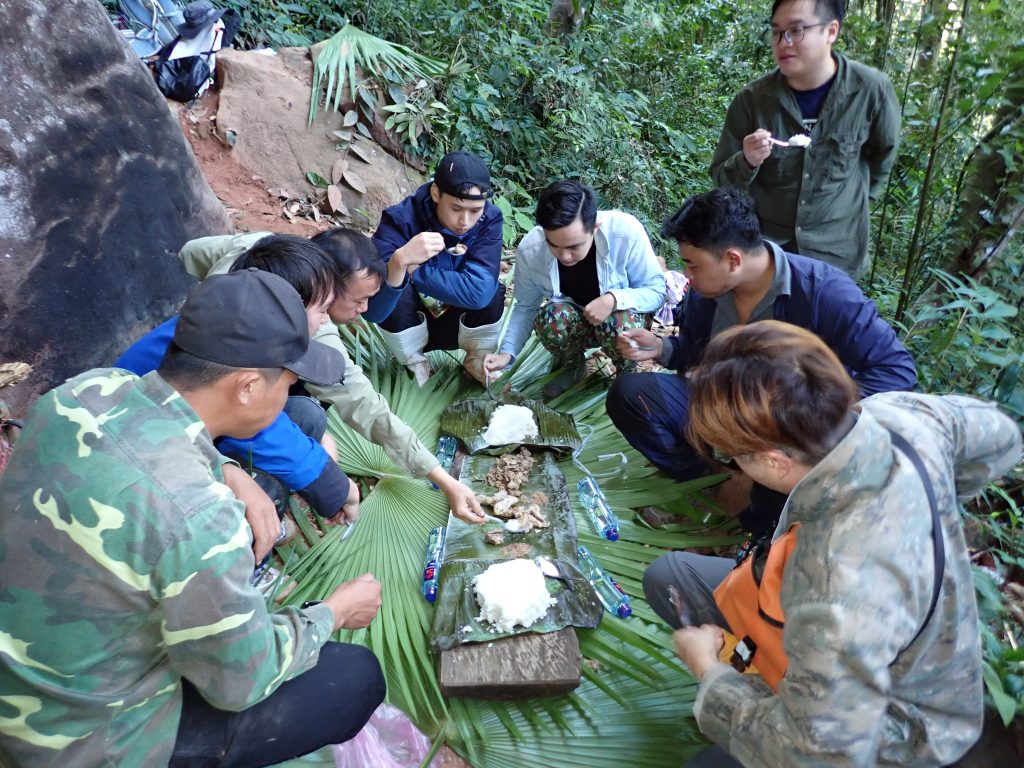
After the fieldwork, team members returned to Hanoi to organize and share the data across the group. This survey marked the final field trip within the three-year project “Species Diversity of Terrestrial Vertebrates in the Mountains of Indochina” supported by the Nagao-NEF. While the field season has ended, the connections formed through shared work in Xuan Nha and other areas are expected to continue to supporting future research, training, and long-term collaboration across Indochina.