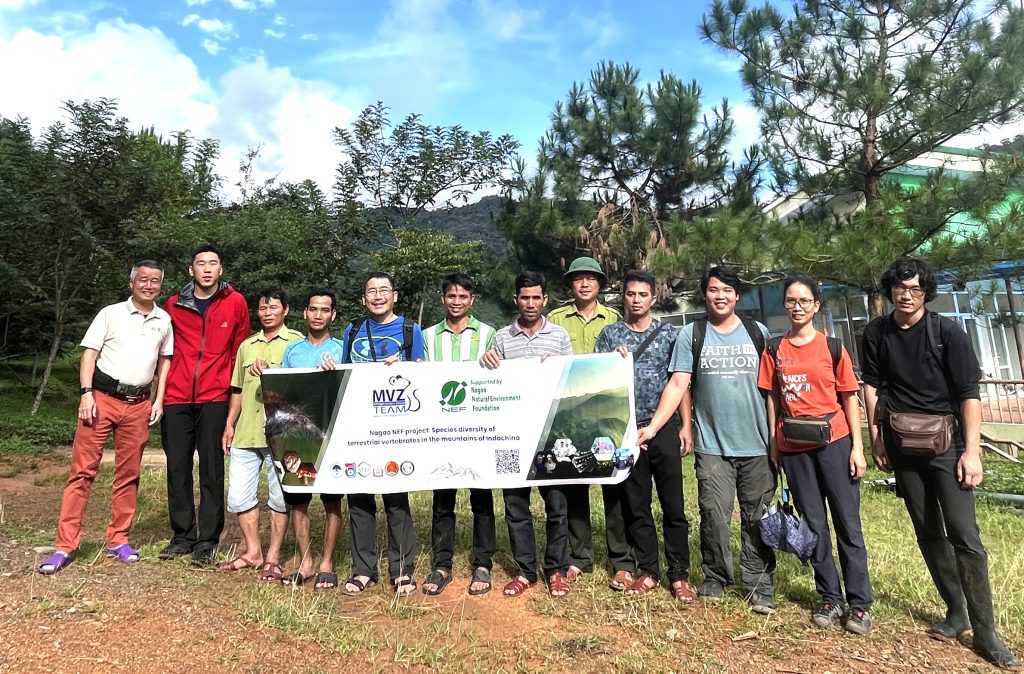
In late October 2025, the MVZ team and partners carried out a field survey in Kon Ka Kinh National Park, Gia Lai Province (Vietnam) as part of the Nagao-NEF project on terrestrial vertebrate diversity in the mountains of Indochina. Kon Ka Kinh is a large forested and protected area in Vietnam’s Central Highlands, and serves as a crucial stronghold for biodiversity. The national park remains one of the most important places to document wildlife and understand how mountain ecosystems are changing.
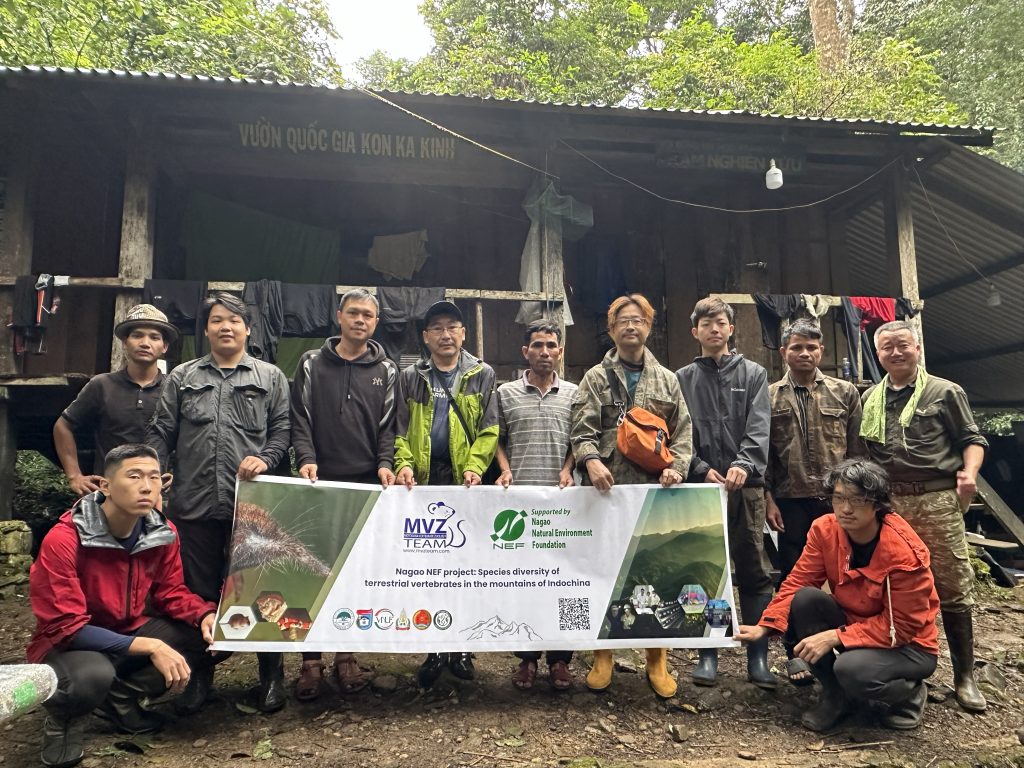
The survey team included members from Kyoto University and the Institute of Biology (VAST). Prof. Masaharu Motokawa (PI) and Prof. Kanto Nishikawa, Dr. Yukio Ichioka, Mr. Kai Shimamura, and Mr. Takuto Mizuno joined from Japan. Assoc. Prof. Nguyen Truong Son, Dr. Ninh Thi Hoa, and Mr. Vu Kim Luong joined from Vietnam. The team was well supported throughout the trip by local guides and rangers, whose experience in the forest was important for both fieldwork and safety.
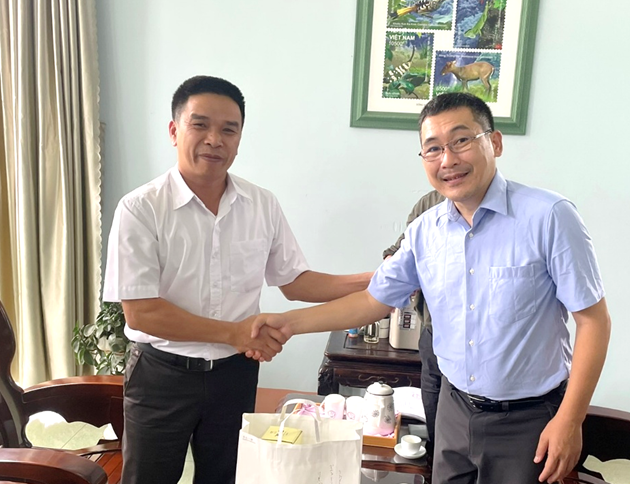
After traveling from Hanoi to the Central Highlands by plane and car, the team visited the park headquarters to meet the staff, confirm the work plan, and review basic rules for working inside the protected area. Not long after, the team moved along forest trails to a campsite deeper in the forest. Once the base camp was set up, the easy pace of city life was replaced by the intense regimen of field science.
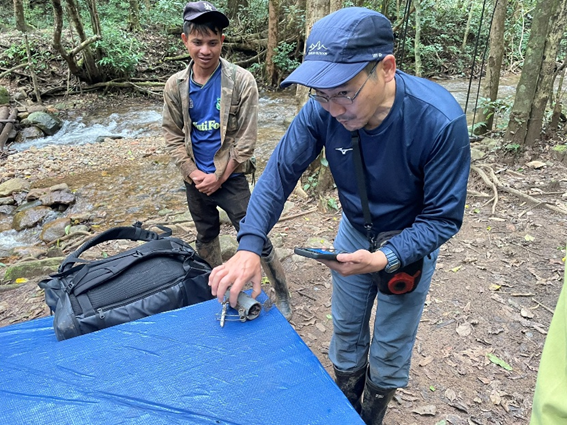
To cover different animal groups efficiently, the team split into three specialized groups: small mammals (rodents and moles), bats, and herpetology (amphibians and reptiles). The small-mammal group set trail cameras and used several trap types, including pitfall traps, Sherman traps, and mole traps, placing them carefully in promising microhabitats along the transects.
The bat group worked mostly at night, setting mist nets and harp traps in suitable flight corridors and near forest edges, while also recording echolocation calls with a bat detector to improve detection of species that are difficult to capture.
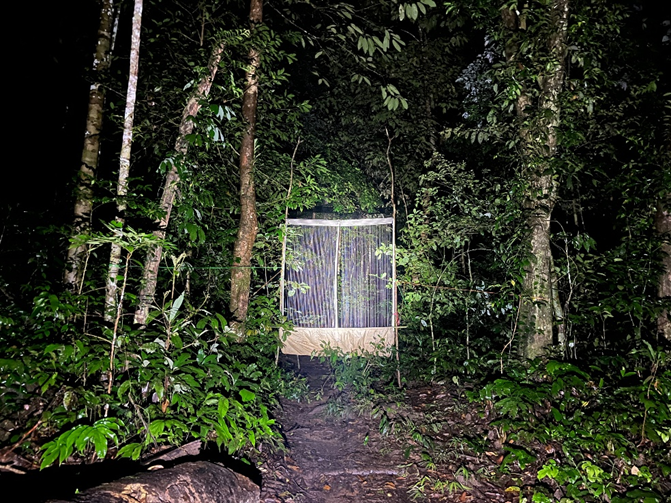
The herpetology group looked for reptiles and amphibians sometimes along streams, sometimes in the forest. They checked ground, trees, and inside of leaf litter or soil. Funnel traps, made of simple net cages and fences were set in certain places to help them.
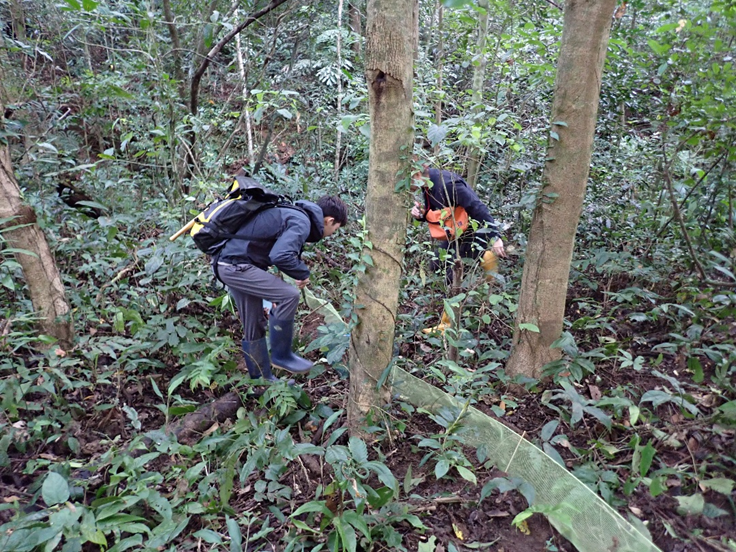
Mountain fieldwork is rarely easy. The team had to carry large supplies on steep, slippery slopes, and at night they had to check traps and handle animals by the light of headlights. At camp, the job went on with processing specimens and keeping track of batteries to make sure that every data point was safe.
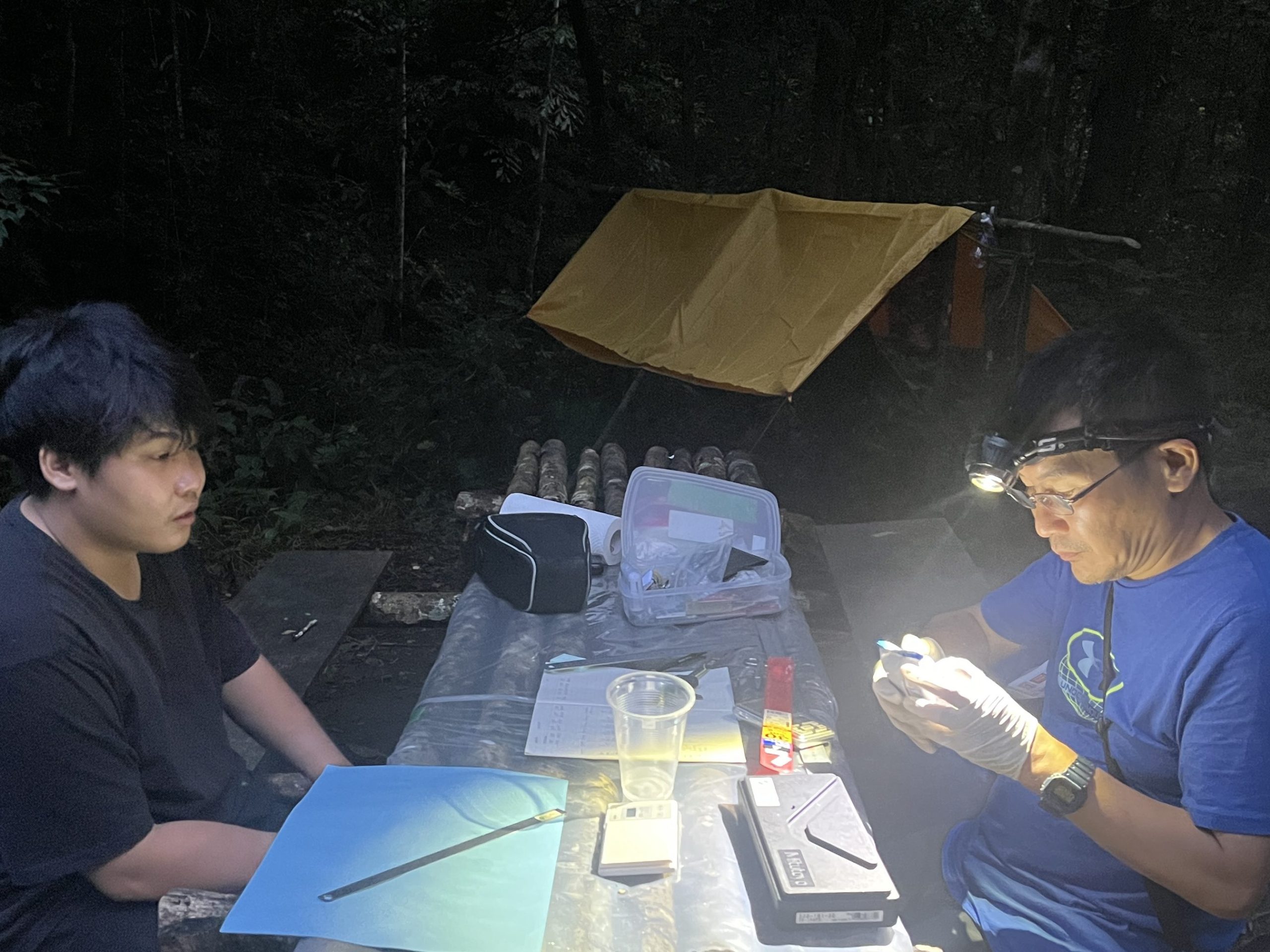
The hard work paid off. The team collected over 100 specimens, documenting several species that appear to be new records for Kon Ka Kinh. The partnership was just as crucial; sharing skills, from navigating to preparing specimens, brought the visiting scientists and the local rangers closer together. The team has departed the forest, but the scientific job is only beginning. They are now working on turning these field notes into useful conservation data.