
From November 18 to December 1, 2024, members of the MZV team from Vietnam and Laos, led by Prof. Masaharu Motokawa from Kyoto University Museum, embarked on a comprehensive field survey in Xaiyabouli Province, Lao PDR. This initiative was part of the Nagao NEF project, aimed at deepening vertebrate diversity understanding and strengthening regional conservation efforts.
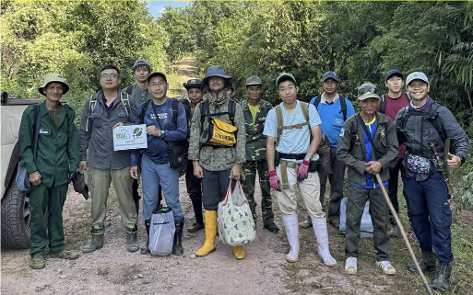
The team implemented an array of field techniques to assess biodiversity, focusing on small mammals, bats, and other vertebrates. Sherman traps, collapsible traps, cage traps, and pitfall traps were deployed along transects through forests and agricultural fields. Local knowledge was also utilized with traditional traps for capturing rodents and tree shrews.
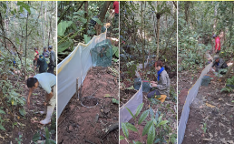
Camera traps were placed in key locations to monitor nocturnal species, while harp traps and mist-nets were set up in flyways like forest gaps and stream corridors for bat surveys. Acoustic surveys using SM4 bat recorders were conducted to capture echolocation calls, helping identify infrequent or elusive bat species.
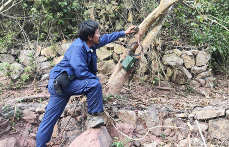
Fieldwork took place continuously during both daylight and nighttime hours, with the team paying particular attention to ecologically sensitive zones such as streams, forest edges, and mixed-use agricultural landscapes. These areas are known to harbor high vertebrate activity, making them priority sites for monitoring.
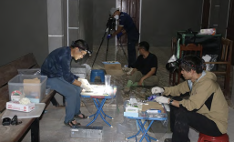
A temporary workstation was set up in the field for processing specimens. Researchers measured and examined captured animals, photographed both live and voucher specimens, and meticulously recorded data.
This field survey under the Nagao-NEF project showcased not only the biodiversity of Laos but also the power of collaboration across borders and disciplines. With shared commitment from researchers, local communities, and institutions, efforts like these pave the way for sustainable conservation and deeper ecological understanding in Southeast Asia.