
October 22 – November 1, 2024. Under the leadership of Professor Masaharu Motokawa from the Kyoto University Museum, an international research team—comprising Professor Kanto Nishikawa, Dr. Shinya Okabe, and Dr. Yugo Ikeda from Japan, Dr. Bounsavane Douangboupha from the Lao PDR, along with experts from Vietnam—conducted a biodiversity survey at Nghe An Province. This area features evergreen secondary forests that have been significantly affected by human activities. Other habitats surveyed include planted forests, primary limestone mountain forests, farmland, and post-extraction hilly areas.
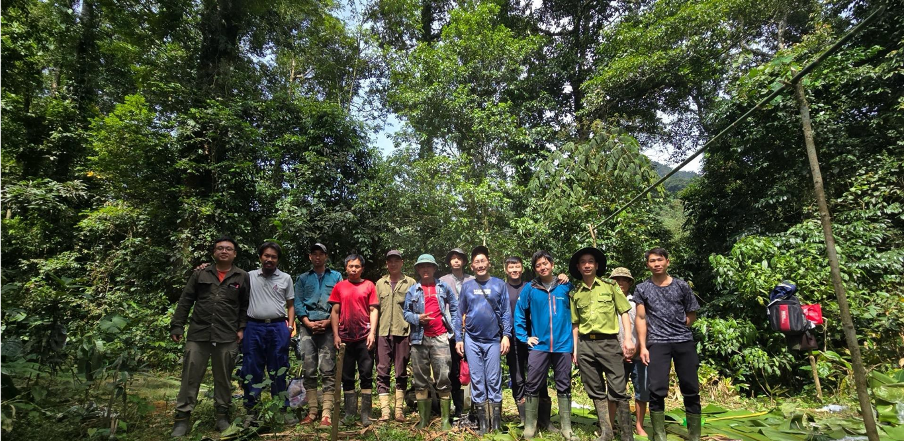
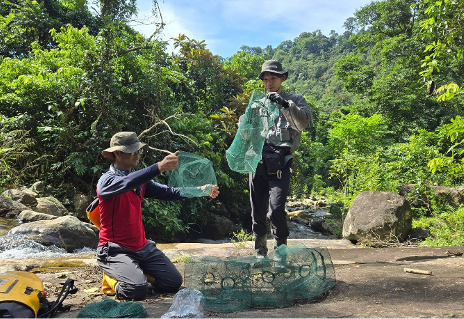
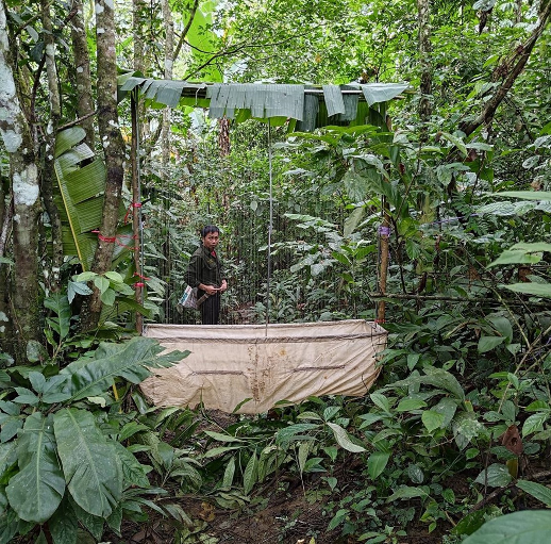
After a long journey involving multiple checkpoints, the team arrived at the Forest Ranger Station. There, scientists, students, forest rangers, and residents worked closely together to implement various sampling methods, including the deployment of approximately 200 Sherman traps, camera traps, shrew traps, mist nets, harp traps, pitfall traps, and fish traps, aimed at capturing amphibians and reptiles. The collected specimens were then processed, photographed, and recorded, representing a wide range of species such as bats, rodents, squirrels, and snakes.
Beyond scientific activities, the research team had many opportunities to engage with the local community. Intimate birthday celebrations, shared meals, and casual conversations fostered meaningful bonds between researchers and residents. The sincere hospitality of the forest rangers and local people not only left a deep impression but also created a natural space for cultural exchange and shared understanding of biodiversity conservation.
These experiences were more than just social interactions—they reflected a positive shift in local awareness and action toward environmental protection. The team deeply appreciates and honors those who live in close connection with the forest—people who are truly part of the natural environment. We hope that the impressions left by this journey will inspire a greater sense of responsibility and motivation within the community, contributing to sustainable and equitable development for future generations.