August 8–27, 2025 | Japan
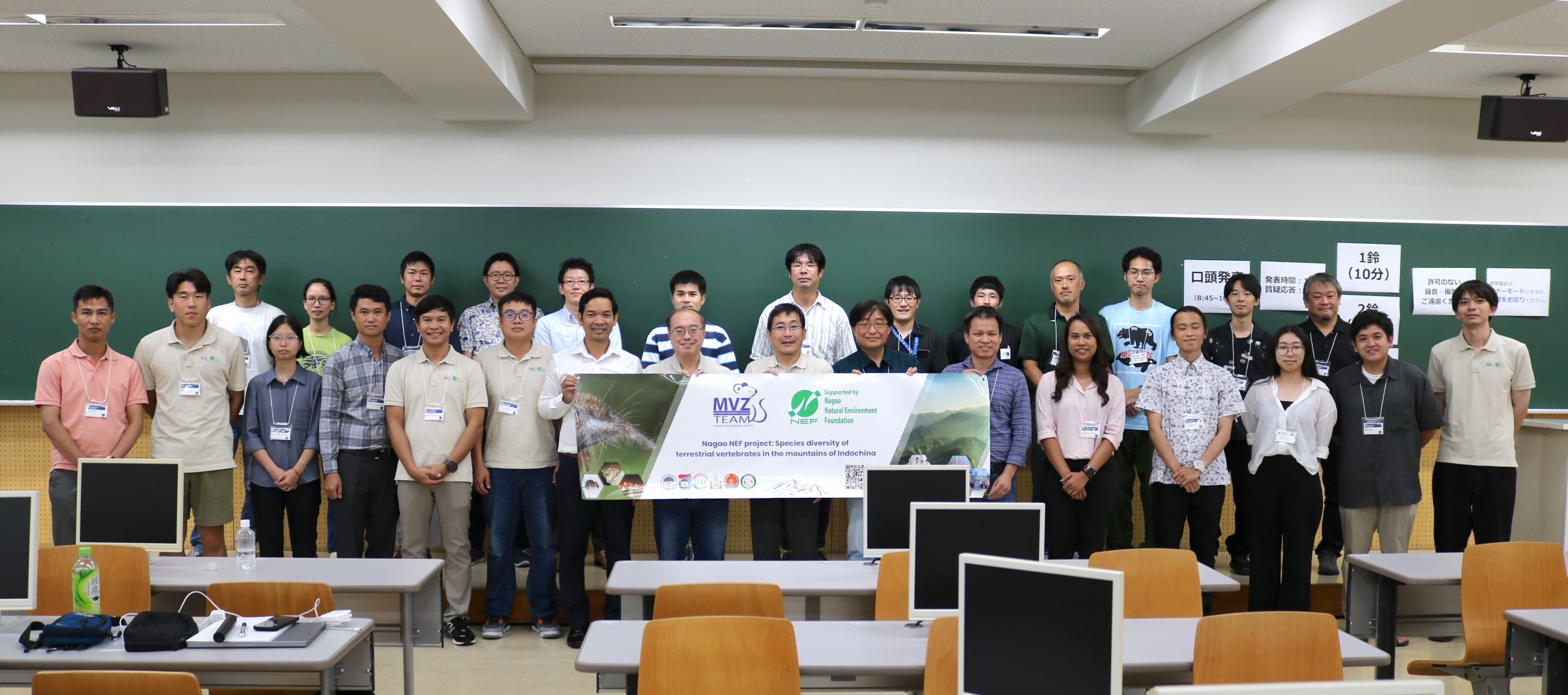
In August 2025, members of the MVZ team from Vietnam and Laos, under the guidance of Prof. Masaharu Motokawa (Kyoto University), embarked on a 20-day academic visit to Japan with the kind support of the Nagao Natural Environment Foundation (Nagao NEF), JSPS, and the Vietnam Academy of Science and Technology (VAST). The program aimed to foster scientific exchange, strengthen museum-based research capacity, and promote participation in the 2025 Annual Meeting of the Mammal Society of Japan (MSJ).
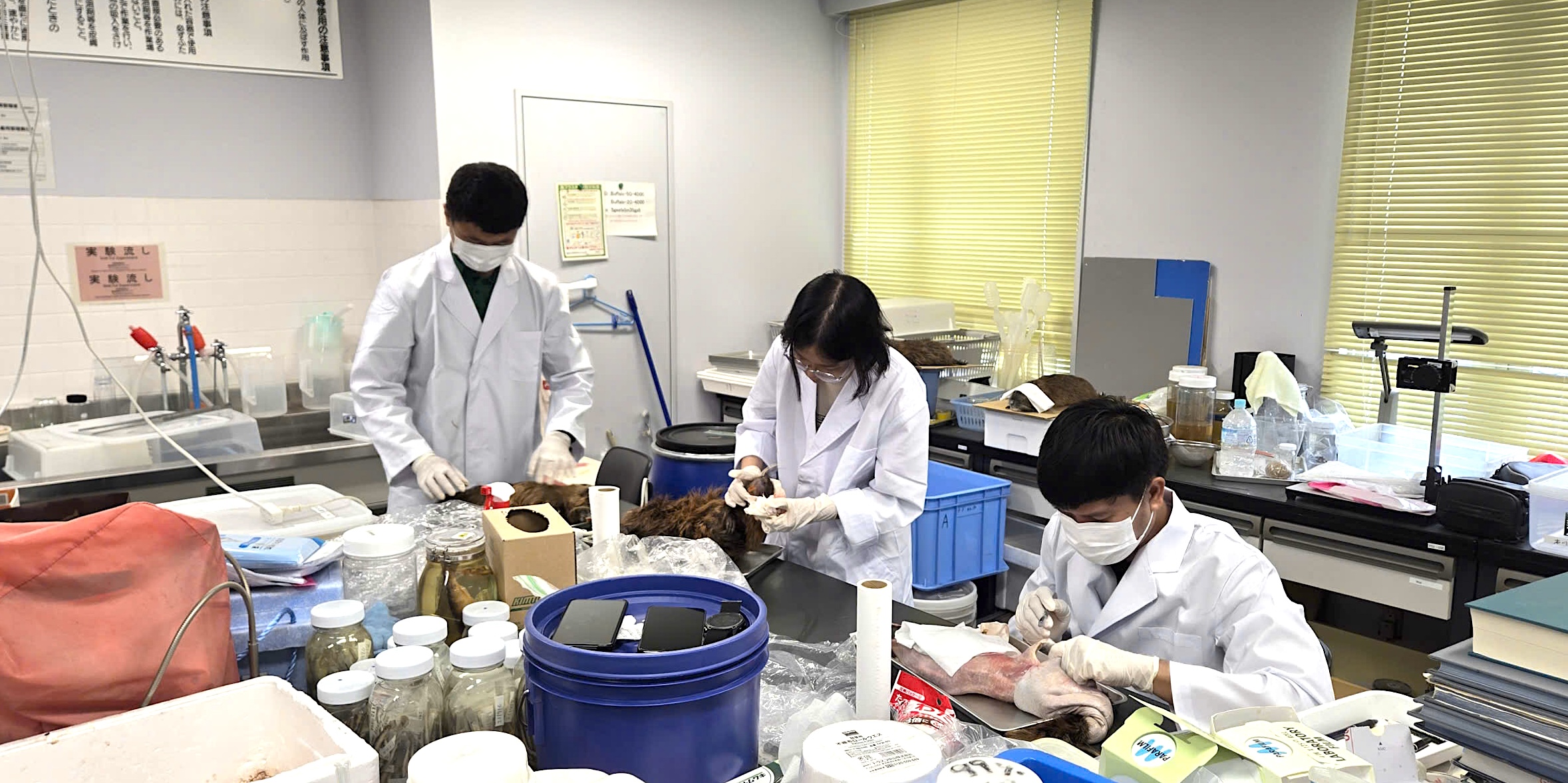
The visit began in Kyoto, where the team undertook intensive hands-on training in specimen preparation at the Kyoto University Museum, working on Myocastor coypus (Nutria), Ursus thibetanus (Asian black bear), Nyctereutes viverrinus (Japanese raccoon dog), and Martes melampus (Japanese marten).
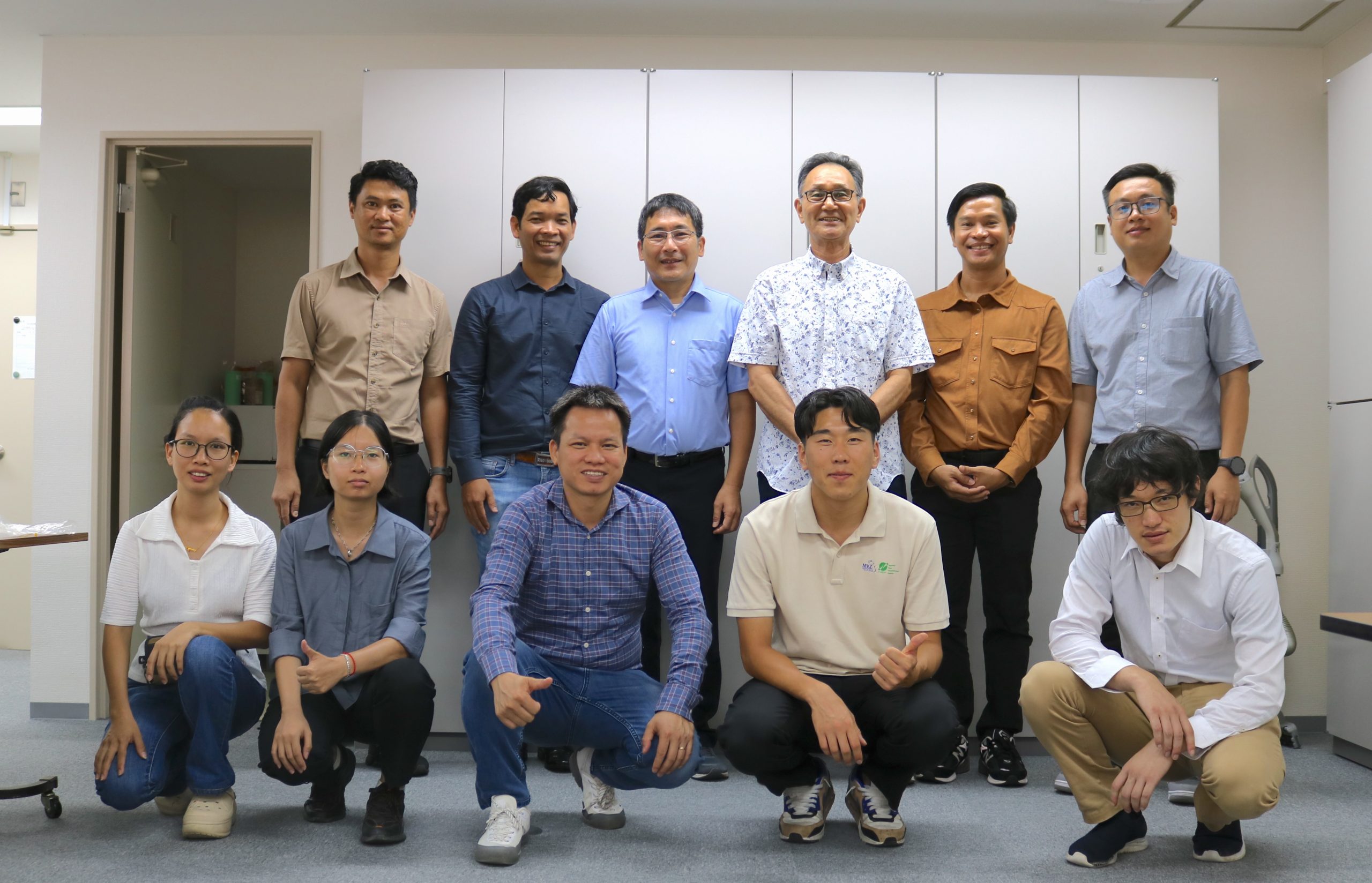
Participants also joined the 2nd Japan–Laos–Vietnam Joint Seminar on the Species Diversity of Terrestrial Vertebrates, held at the Kyoto University Museum on August 14, which featured nine speakers from five countries: Japan, Vietnam, the Philippines, Laos, and Myanmar.
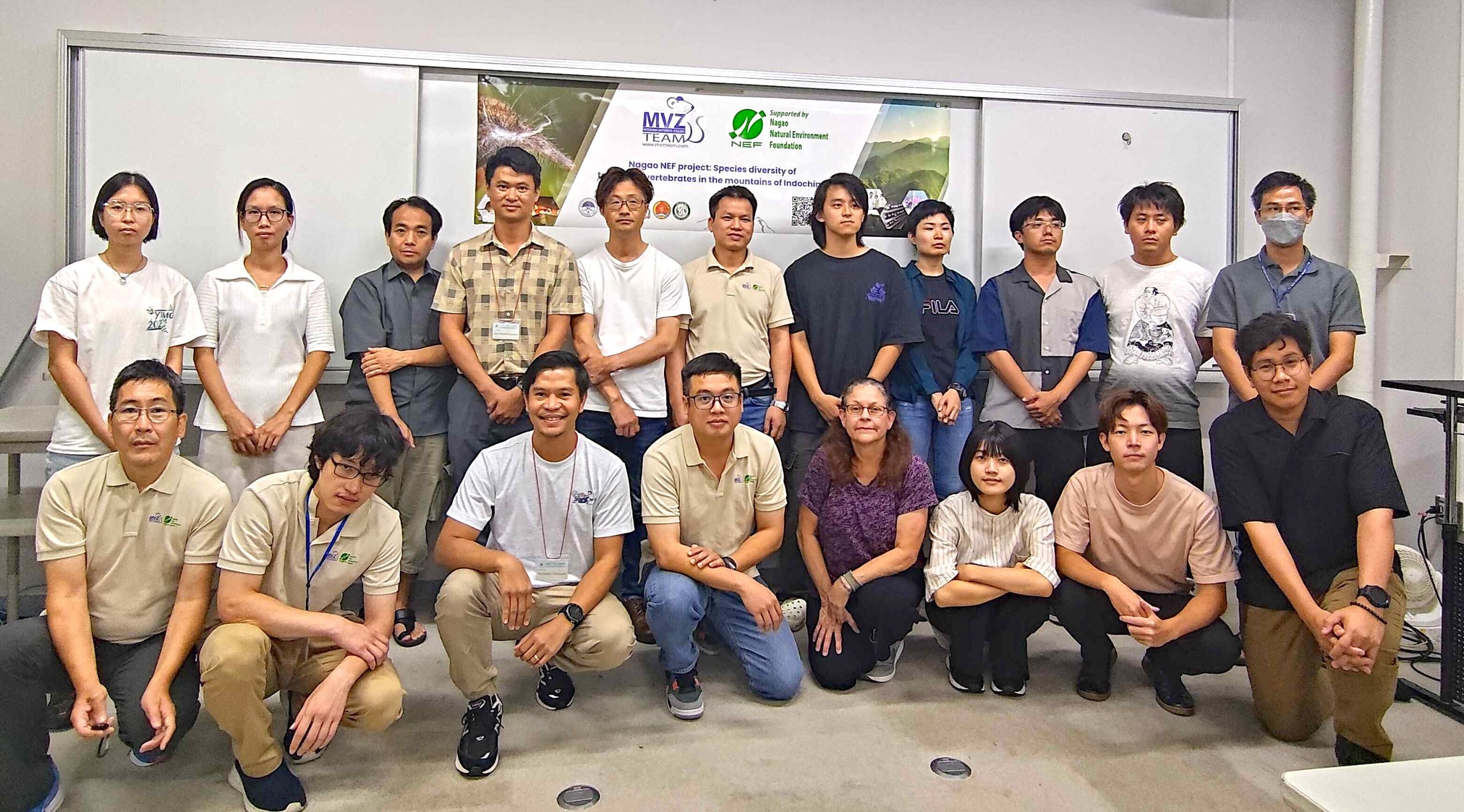
Presentations covered a wide range of topics on mammals, amphibians, and reptiles, and were followed by valuable discussions with Prof. Masaharu Motokawa, Prof. Nguyen Thien Tao, Prof. Kanto Nishikawa, Prof. Takafumi Nakano, Dr. Christine Kaiser, and other colleagues from across Southeast Asia.
The seminar provided an excellent platform for young researchers to exchange knowledge and enhance regional collaboration in biodiversity studies.
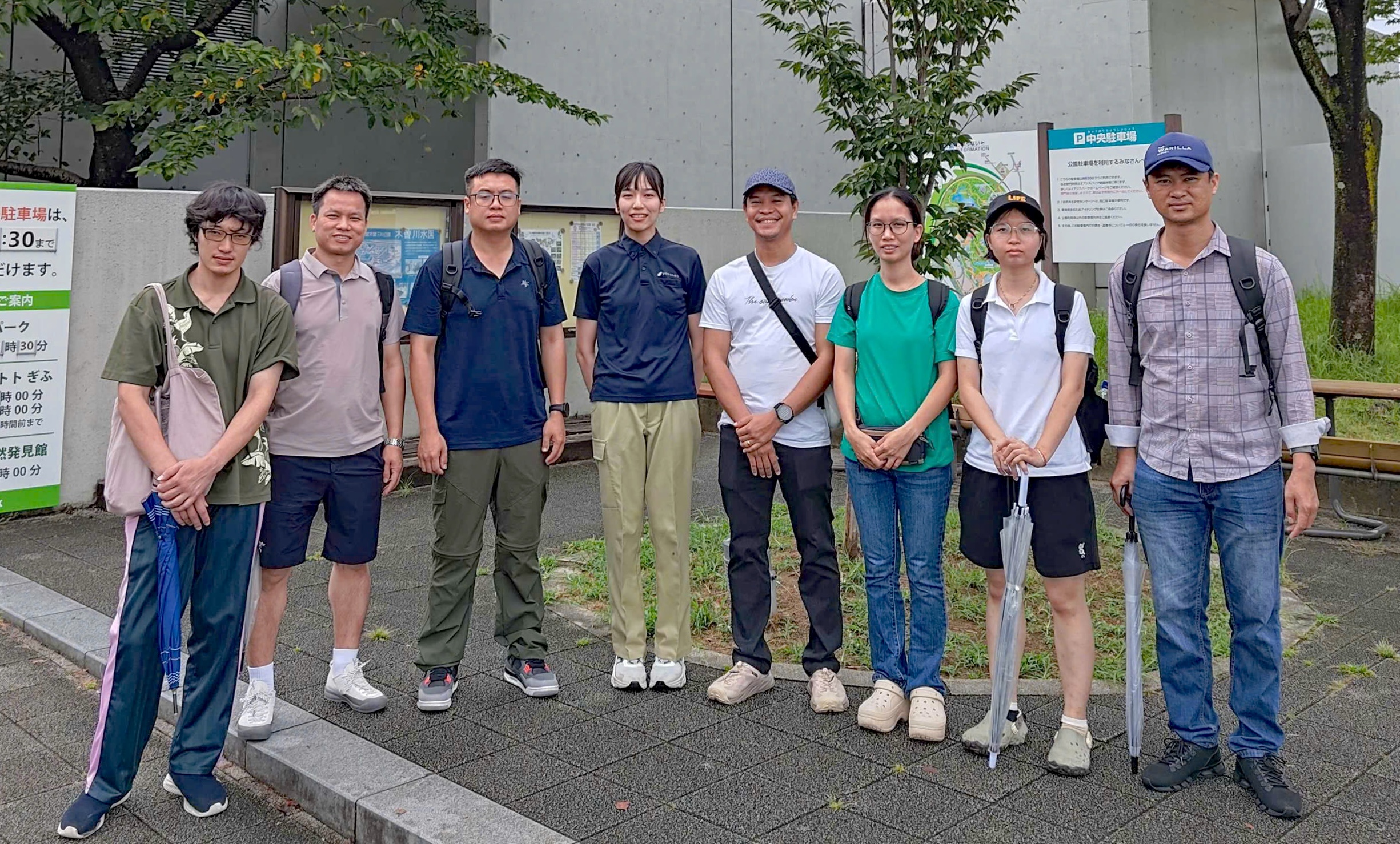
From August 17 to 20, the team continued their journey in Tokyo, visiting the National Museum of Nature and Science and the Saitama Museum of Natural History.
Through these visits, they learned about both traditional and modern practices in collection digitization, curation, and museum-based education.
They also had the chance to explore Japan’s deep cultural connection with nature through visits to Hodosan Shrine, Mitsumine Shrine and Chichibu Shrine, where they experienced the country’s unique harmony between spirituality and the natural world.
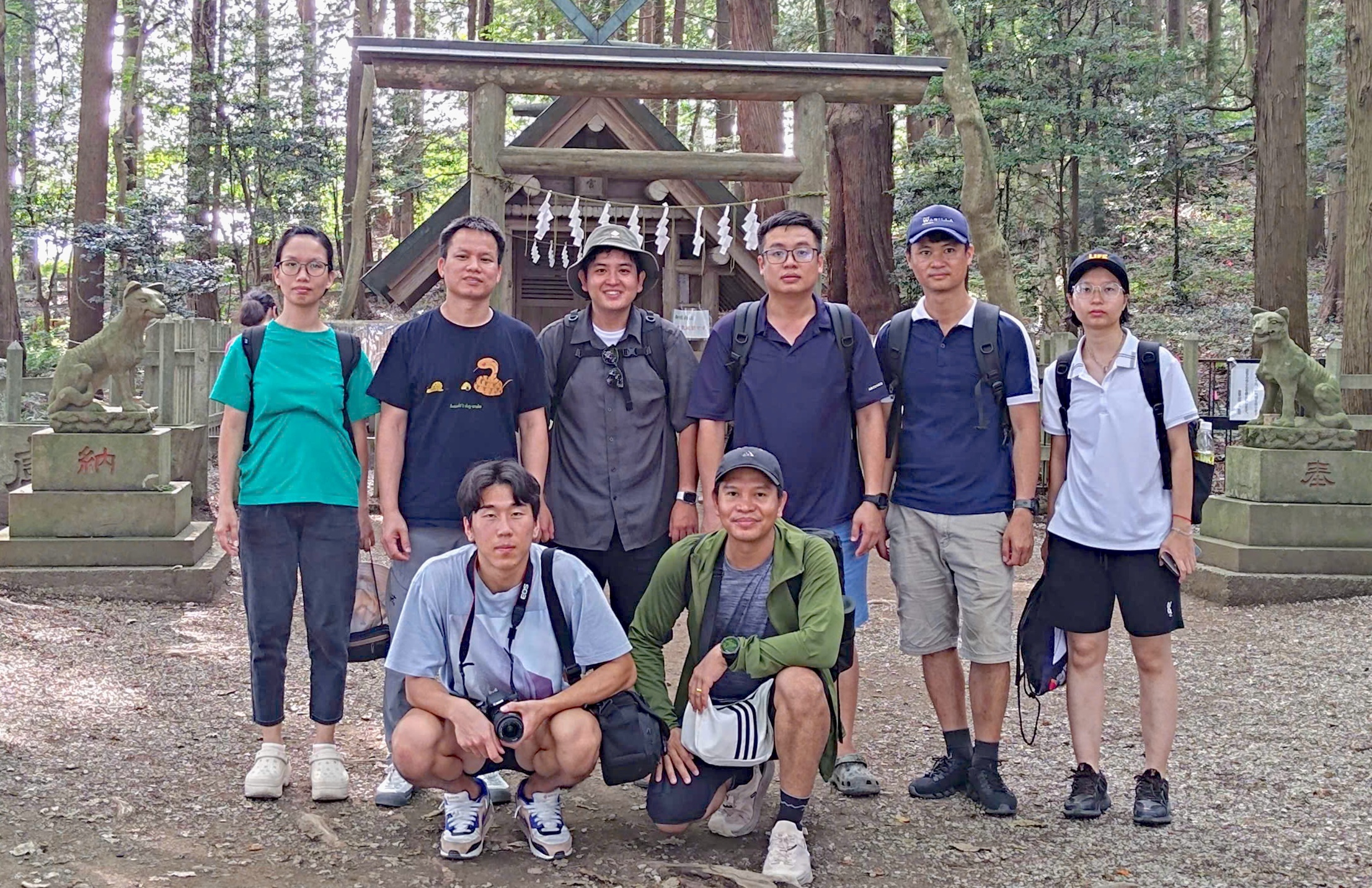
A highlight of this segment was a meeting with Dr. Hiroshi Kohno, President of the Nagao NEF, where participants discussed the Foundation’s long-term contributions to biodiversity research and capacity building in Indochina. The exchange further strengthened the friendship and cooperation between Japan and Southeast Asian countries, reflecting the lasting impact of the Nagao NEF’s mission.
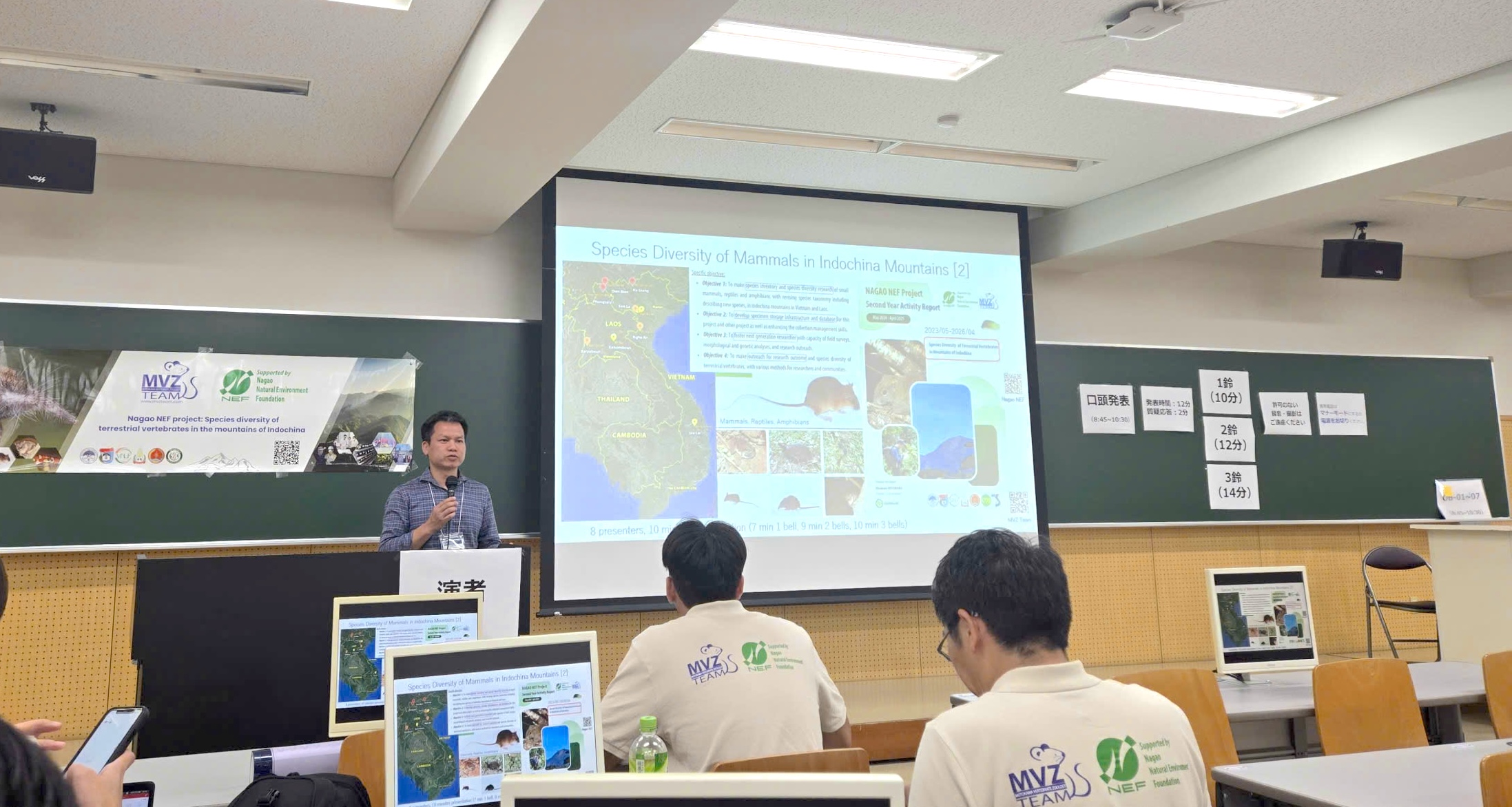
The final leg of the visit took place in Sapporo and Ebetsu, Hokkaido, where the team attended the 2025 Annual Meeting of the Mammal Society of Japan at Rakuno Gakuen University (August 22 to 25).
All members joined the Free Session: “Species Diversity of Mammals in Indochina Mountains”, which featured ten presentations and dynamic discussions on taxonomy, ecology, and conservation of Southeast Asian mammals. The conference provided valuable opportunities for networking and opened new avenues for collaboration in regional mammal research.
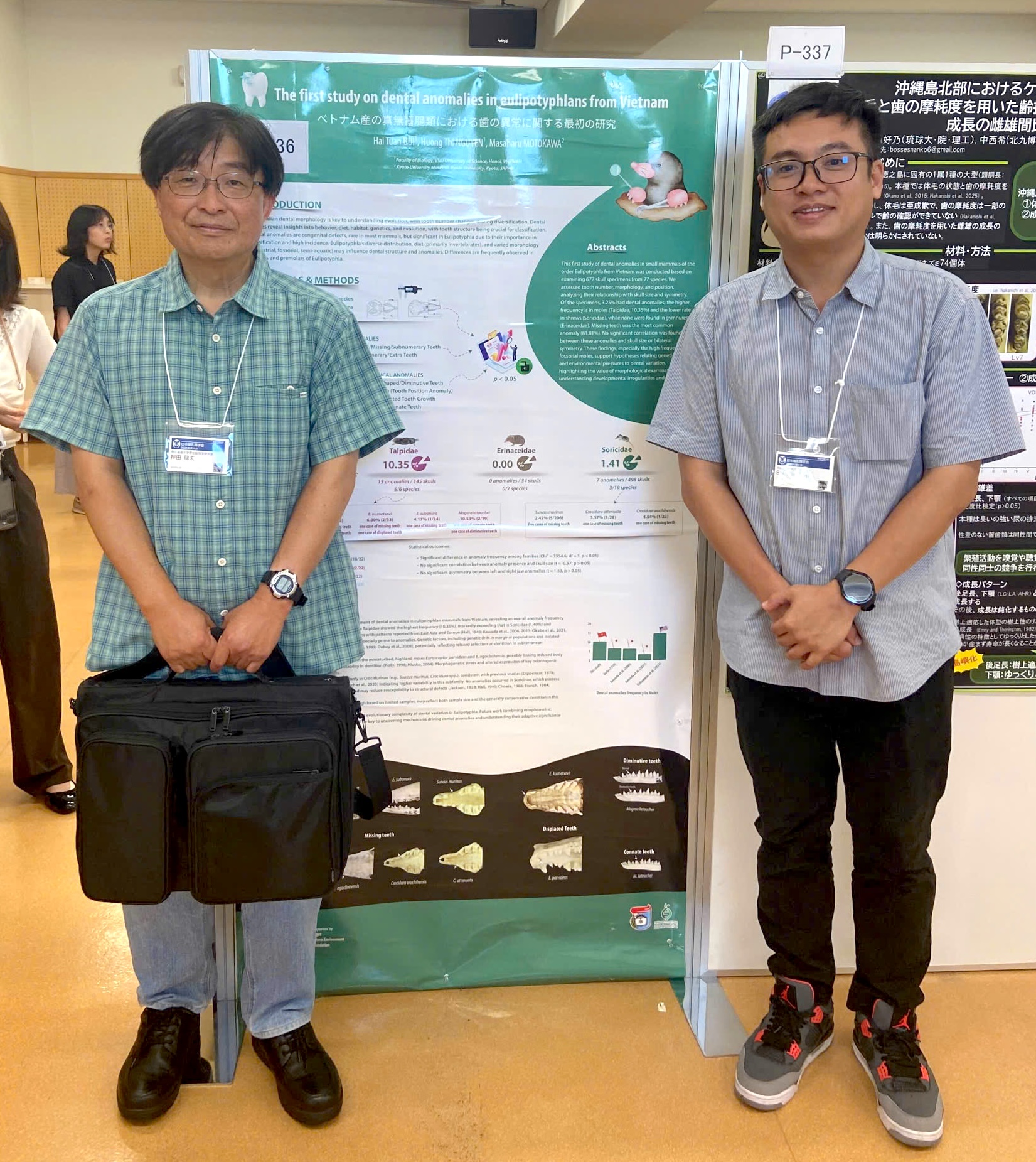
Beyond their own session, team members also attended other sessions, oral and poster presentations that showcased cutting-edge studies in mammalogy across Japan.
The meeting was a particularly meaningful occasion for MVZ team members to interact with leading Japanese mammalogists and exchange ideas on future joint studies.
After returning from Hokkaido, the visiting team—together with Dr. Ith Saveng from the Royal University of Phnom Penh—participated in a concluding seminar at Kyoto University Museum (August 26), where Dr. Saveng presented his recent work on Cambodian bat diversity.
The session emphasized the growing network of collaborative research among Japan, Vietnam, Laos, and Cambodia, built upon years of Nagao NEF support and academic mentorship from Prof. Motokawa.
The Japan Visit 2025 successfully strengthened scientific capacity, communication, and international cooperation among young researchers in Indochina.
The MVZ team sincerely thanks the Nagao NEF, JSPS, Kyoto University Museum, and VAST for their generous support, hospitality, and long-standing commitment to advancing biodiversity research in the region.